

The Olive Oil Harvest: One of the Oldest Sicilian Traditions, Still Happening Every October
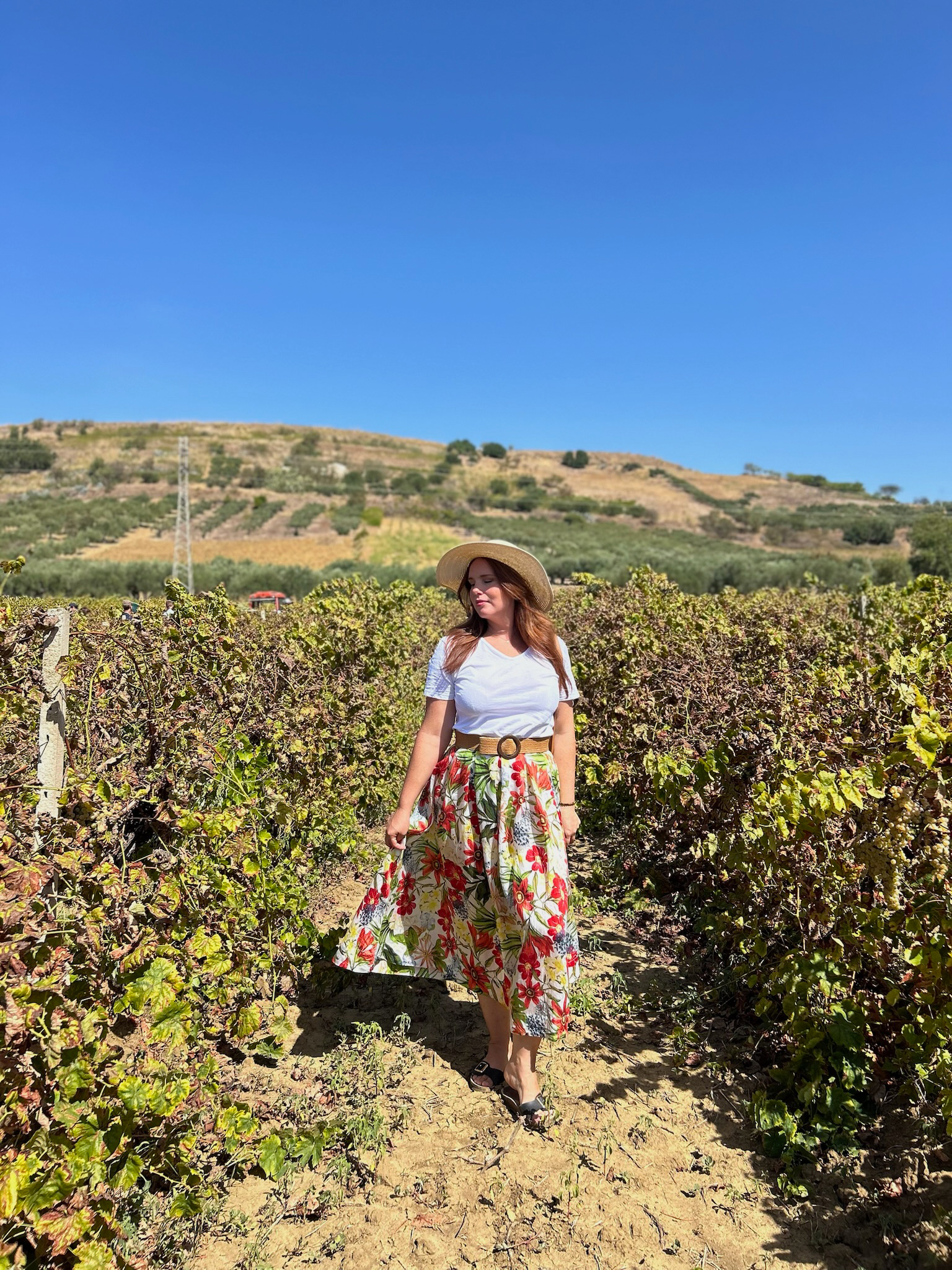
For thousands of years, the Sicilian olive oil harvest has shaped landscape, food and family life. Today, the best producers are carrying that tradition forward with an extraordinary level of knowledge, precision and care.

Every October, olive harvest begins again in Sicily.
Across the island, families and producers return to the groves, nets appear beneath the trees, crates begin piling up and conversations inevitably turn to the same things: the weather, the fruit and whether this is the week to start picking.
It is one of Sicily’s oldest traditions, but I think what makes it particularly interesting is that it has never become simply a tradition for tradition’s sake. Olive oil is still an essential part of the Sicilian kitchen, the trees are still part of the working landscape, and the harvest still matters enormously to the people producing it.
The tools have changed, of course. Today’s best mills are highly technical operations, and our understanding of how to protect the quality of the oil has come a very long way. But many of the fundamental decisions still begin exactly where they always have: with the tree, the fruit and knowing when it is time to harvest.
And that story in Sicily goes back thousands of years.
Olive oil has been part of Sicily for more than 2,000 years
The olive was present in Sicily in antiquity, with cultivation developing under the Phoenicians and expanding significantly with Greek colonization from the eighth century BC onward. By Roman times, olive growing and oil production had become an established part of the island’s agricultural economy, and cultivation continued to evolve through the Arab period and beyond.
That history is still visible everywhere you travel.
Olive trees grow across the island, sometimes in orderly groves and sometimes seemingly wherever the landscape has allowed them to survive. You find very old trees with thick, twisted trunks growing beside much younger plantings, and certain areas of Sicily have been associated with particular olives for generations.
This is where the subject becomes much more interesting than simply talking about “Sicilian olive oil.”
Because there really is no such thing as one Sicilian olive oil.
Sicily has its own language of olive varieties
Just as we would never talk about Nero d’Avola, Nerello Mascalese and Grillo as though they were interchangeable simply because they are Sicilian grapes, our native olive varieties have completely different personalities too.
Among Sicily’s most important are Nocellara del Belice, Cerasuola, Biancolilla, Tonda Iblea, Nocellara Etnea, Moresca and Ogliarola Messinese, along with a number of smaller local cultivars.
Where you are on the island makes an enormous difference.
In western Sicily, Nocellara del Belice is one of the great protagonists. It is particularly associated with the Valle del Belice and is unusual because it is excellent both as a table olive and for oil. As an oil, it can be wonderfully expressive, with those very green flavours of tomato, artichoke, fresh-cut grass and herbs, followed by bitterness and that characteristic peppery finish.
Cerasuola, another western variety, generally gives a more robust and structured oil, while Biancolilla tends to be softer and more delicate.
Travel southeast toward the Monti Iblei and you enter the territory of Tonda Iblea, one of my favourite examples of just how distinctive an olive variety can be. Good Tonda Iblea oil often has an unmistakable green-tomato aroma. Once someone points it out to you, it is difficult not to recognize it again.
Around Etna, Nocellara Etnea grows in a very different environment altogether, influenced by altitude, volcanic terrain and much greater temperature variation.
And this is really the beginning of learning how to taste olive oil properly.
Instead of simply asking, “Do I like this?”, you start asking where it comes from, which olive was used, whether it is a monovarietal or a blend, when the fruit was harvested and what the producer was trying to achieve.
It is very similar to the way our relationship with wine changes once we begin understanding grape varieties and terroir.
Except with olive oil, there is another crucial element that people outside the industry often know very little about: time.
The moment you harvest changes the oil
One of the biggest decisions a producer makes each year is when to pick.
An olive does not go from “unripe” to “ripe” overnight. It develops gradually, changing colour from green through shades of purple and eventually darker tones as the fruit matures. During that process, the amount of oil inside it is changing too.
If you harvest earlier, you generally get less oil.
And I mean that quite literally. The same quantity of olives can produce substantially fewer litres earlier in the season than it would if the producer waited for the fruit to mature further.
So why would anyone intentionally harvest early?
Because yield is only one part of the equation. Earlier-harvested olives can give more aromatic oils with greater bitterness and pungency and, importantly, higher concentrations of polyphenols. Those phenolic compounds are part of what gives a top-quality oil its structure, stability and many of the characteristics we associate with excellent extra virgin olive oil.
So a producer may knowingly sacrifice quantity to make the style and quality of oil they want.
I find this one of the most interesting parts of the whole process because it immediately changes the way you look at price. Two producers may own similar amounts of land and harvest a similar quantity of olives, yet one may end up with far fewer bottles because they chose quality over maximum yield.
And harvesting is only the beginning.
Once the olive leaves the tree, another clock starts running.

Good olive oil starts with good fruit
We sometimes talk about olive oil as though the magic happens at the mill, but you cannot mill your way out of bad fruit.
Olives are fresh fruit, and once harvested they begin deteriorating. If they are damaged during picking, packed into sacks, left sitting in large piles or kept too long before milling, heat and fermentation can develop very quickly.
And those problems show up in the oil.
This is why quality producers are almost obsessive about how the olives move from tree to mill. The fruit is usually collected into ventilated crates and transported quickly, with the goal of milling as soon as possible.
Sometimes, when we visit producers during harvest, the conversation is less about how many kilos they picked that day and more about how quickly they can get those olives processed.
That urgency tells you a lot.
What actually makes an olive oil “extra virgin”?
This is another area where there is a lot of confusion.
“Extra virgin” is a legal category, not simply something attractive to put on a label.
The oil must be extracted mechanically rather than chemically refined and must meet specific chemical and sensory standards. Among other criteria, a true extra virgin olive oil cannot have sensory defects and must show positive fruitiness.
You will often hear acidity mentioned as an indicator of quality, and it is important, but probably not in the way many people imagine.
Acidity in olive oil is not the sharp or sour taste we normally associate with the word. You cannot taste “0.2% acidity.” It is a laboratory measurement of free fatty acids and can tell us something about the condition of the fruit and how carefully it was handled.
But here is the important distinction: meeting the requirements for extra virgin does not automatically make an oil exceptional.
It qualifies it for the category. The truly great oils go much further. And this is where the miller becomes just as important as the grower.

A modern olive mill is not really a “press”
We still say an oil has been “pressed,” and you will see first cold pressed written on bottles everywhere, but that language belongs largely to an older method of production.
At a modern quality mill, olives are cleaned and crushed into a paste. That paste then goes through a process called malaxation, where it is slowly mixed to allow the tiny droplets of oil to come together before the oil is separated.
It sounds simple until you realize how many variables are involved.
How finely should the fruit be crushed? How long should the paste be mixed? At what temperature? How much oxygen is it exposed to?
Every one of those decisions can affect both yield and quality.
Work the paste harder or longer and you may extract more oil, but you can also lose some of the volatile aromas and phenolic compounds you were trying so hard to preserve in the first place.
This is where I think the story of Sicilian olive oil gets particularly fascinating.
We often romanticize tradition as though the best way to honour it is to keep everything exactly the way it was done a hundred years ago.
But great olive oil proves the opposite. The tradition is the grove, the cultivars, the knowledge of the land, the harvest and the place that olive oil occupies at the Sicilian table.
Modern technology allows a great producer to protect all of that more precisely.
The best producers aren't choosing between tradition and innovation. They understand that one can make the other better.

And then there is the oil everyone is waiting for
During harvest, eventually the first new oil comes out of the mill.
Olio nuovo.
If you have never tasted very fresh olive oil, it can be surprising. It can smell intensely of green vegetation: freshly cut grass, tomato leaf, artichoke, herbs, green almond. Then you taste it and there may be a pronounced bitterness followed by a peppery sensation at the back of your throat.
Sometimes enough to make you cough.
And no, that does not mean the oil is “too strong.”
In a high-quality oil, bitterness and pungency are considered positive characteristics and are associated with the phenolic compounds naturally present in the fruit.
Of course, not every good oil should taste exactly the same. A delicate Biancolilla and a powerful early-harvest Cerasuola should not. That would defeat the whole point.
The pleasure is learning to recognize those differences.
And during the harvest, you are tasting these oils at the moment when they are at their most vivid.
This is the Sicily we want our guests to experience
When we include olive oil in one of our journeys, it is not because “olive oil tasting” sounds like a nice Sicilian activity to add to an itinerary.
We want you to see both sides of it.
There is the tradition: walking among the trees, understanding the history of the grove, meeting families who have grown olives on the same land for generations and seeing the harvest become part of daily life again each autumn.
But then we go deeper.
Which varieties are growing here, and why these ones?
Why did this producer decide to harvest now?
How long ago were these olives picked?
What is happening inside the mill?
What should we actually be looking for when we taste the oil?
Why is this one bitter while another is softer?
And why might an exceptional bottle cost considerably more when, from the supermarket shelf, they all appear to say extra virgin olive oil?
For me, that is where an experience becomes much more memorable. It is wonderful to taste something delicious, but it is even better when someone gives you enough context that you understand what makes it delicious.
Suddenly the bottle you bring home has a place, a varietal, a harvest and a producer attached to it.

And October gives us a very particular window
You can learn about Sicilian olive oil throughout the year, but harvest is different because everything is happening around you in real time.
The fruit is still on the trees. Mills are operating. Producers are tasting the new season and comparing it to last year. Everyone is talking about the weather, the yield and whether this year's oil is going to be a particularly good one.
You get to experience an agricultural tradition that has existed in Sicily for thousands of years while also seeing just how technical and exacting modern extra virgin olive oil production has become.
That combination of tradition and expertise is what makes harvest time so special to us.
And this October, we have one final room available on our last Gems of Sicily journey of 2026.
If you have been thinking about coming to Sicily with us, this is your last opportunity this year, and I can't think of a more interesting season to experience it.
Warmly from Sicily,
Priscilla
Tour Director, Gems of Sicily



Comments